When Your Car Needs More Than a Wash: The Case for a Paint Correction Service
Most car owners treat a wash and wax as the gold standard for keeping their vehicle looking good. And for daily driving, that routine works fine. But if you have ever run your hand over the hood of a car that is a few years old and felt tiny bumps, or noticed a web of fine scratches in direct sunlight, you have already seen the limits of a simple wash. That is where a dedicated paint correction service comes in. It is a different level of care, one that tackles the surface on a microscopic scale rather than just the top layer of dirt.
I have spent years working on automotive paint in the San Diego area, including plenty of jobs in Chula Vista where the sun bakes the clear coat year round. The difference between a car that has been properly corrected and one that has just been waxed is night and day. Let me walk through what paint correction actually involves, why it matters, and what you should expect if you decide to have it done.
What Paint Correction Actually Means
Paint correction is the process of removing or leveling defects in the clear coat and the car paint itself. It is not a wash, not a wax, and not a quick buff. It is a multi-step procedure that uses pro-grade tools and compounds to reduce or eliminate scratches, swirl marks, oxidation, water spots, and other surface flaws. The goal is to restore the clarity and depth that the paint had when it was new, or in many cases, even better than new because the factory finish often has its own imperfections.
A proper paint correction service usually begins with a thorough wash and a deep clean using detailing clay to remove embedded contaminants that a regular wash will not touch. After that, the technician measures the thickness of the paint with a paint depth gauge to know how much material they can safely remove. That step is critical. Every pass with an orbital polisher or a hand buffing pad takes off a tiny amount of clear coat. Go too far and you burn through to the color layer or even the primer. A good operator knows the limits of your particular automotive paint.
The Tools and Materials Matter
There is a lot of gear involved, and the quality of each piece affects the result. You will see microfiber towels used constantly, both for applying products and for wiping residue. Cheap towels can scratch the surface, so most professionals use high GSM microfiber that is soft and lint free. The polishers themselves are usually orbital or rotary machines, and the choice between them depends on the severity of the damage and the hardness of the clear coat.
Compound and polish are two different things, though people often use the terms interchangeably. Compound is more abrasive and is used for the initial cut, removing deeper scratches and leveling the clear coat. Polish is finer and brings out the gloss. A typical correction job might use a heavy-cut compound on a foam pad, followed by a finer polish on a softer pad. Sometimes a final pass with a hand buffing step is needed to get the last bit of clarity. Wet sanding is reserved for the worst cases, like when there are deep scratches that a machine alone cannot level. That technique requires a steady hand and a lot of experience, because you are essentially sanding the clear coat with very fine grit paper while keeping the surface wet to prevent heat buildup.
Why You Might Need It
Not every car needs paint correction. If your daily driver has a few light scratches and you just want it to look decent, a good wax or a paint sealant might be enough. But there are several situations where a correction is the right call:
- Swirl marks from automatic car washes or improper hand drying.
- Oxidation that makes the paint look dull or chalky, common in older cars that have spent years in the San Diego sun.
- Water spots that have etched into the clear coat, leaving a rough texture that washing alone cannot remove.
- Light to moderate scratch removal where the scratch has not gone through the clear coat.
If you are planning to apply a ceramic coating, paint correction is not optional. A ceramic coating bonds to the clear coat and locks in whatever is underneath. If you apply it over a scratched or hazy surface, you will have a perfectly clear ceramic layer that shows every imperfection underneath. That is why any reputable installer will insist on a full correction before applying a coating. The same logic applies to a paint sealant, though sealants are more forgiving than ceramics.
The Process in Practice
A full correction on a typical sedan can take anywhere from six to twelve hours, sometimes more. It is not a quick service. The technician works section by section, often taping off trim and edges to avoid damaging plastic or rubber parts. Each section gets multiple passes with the orbital polisher, using different combinations of compound and pad aggressiveness. The dust from the compound gets everywhere, but a good setup includes a shop vacuum and plenty of microfiber towels to keep things clean.
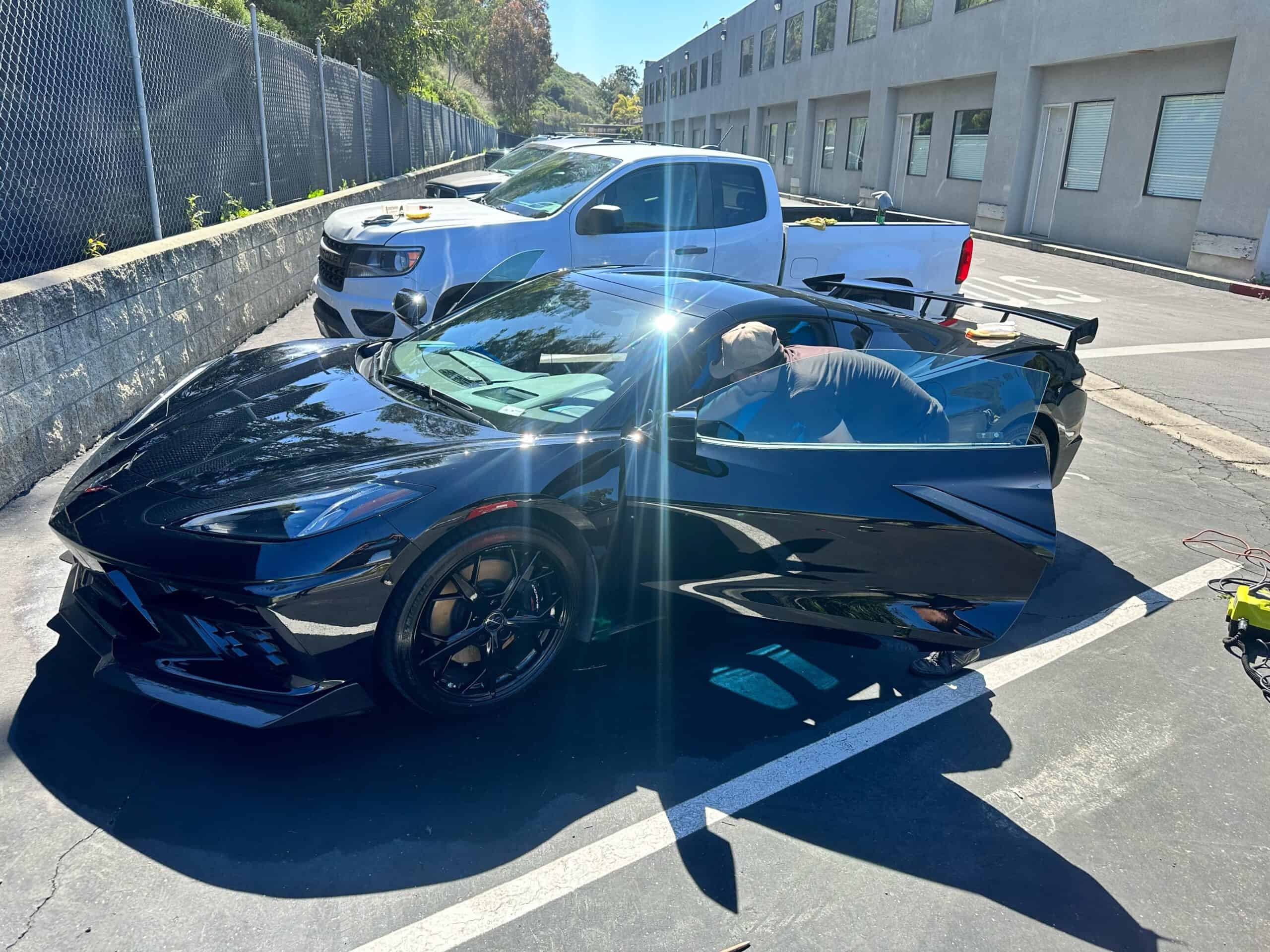
One thing that surprises many owners is how much dust and residue comes off the paint. That is the oxidized clear coat and the micro-layer of scratches being leveled. After the compounding stage, the car often looks hazy. The gloss does not come back until the polish stage. That is a normal part of the process. If someone hands you a car that looks perfect after only one pass, they probably skipped the heavy correction work.
Cost and Value
A proper paint correction service is not cheap. The labor is intensive, the pro-grade tools are expensive, and the risk of damaging the paint is real. Prices vary widely based on the size of the vehicle, the condition of the paint, and the experience of the technician. In the Chula Vista and South Bay market, a full correction on a standard car usually runs several hundred dollars. That might sound steep, but compare it to the cost of a respray or a new clear coat, and it starts to make sense.
There is also the question of longevity. A well-corrected surface, maintained with proper washing techniques and periodic wax or sealant, can stay beautiful for years. The key is to avoid the habits that caused the damage in the first place. That means no drive-through car washes, no dry wiping of dust, and no harsh chemicals. Use a quality car soap, a soft mitt, and microfiber towels for drying. If you live near the coast or in a hot inland area like parts of San Diego, consider a paint sealant or a ceramic coating to add an extra layer of UV protection. The sun is relentless, and clear coat oxidation is a slow process that eventually turns glossy paint into a dull, chalky surface.
When to Skip It
Paint correction is not for every car. If the clear coat is already failing, with large areas of peeling or deep cracking, no amount of compounding will fix it. That car needs a respray or a wrap. Similarly, if the scratches go through the clear coat into the color layer or the primer, you cannot polish them out. You can only improve the appearance slightly, but the defect will remain. A good technician will be honest about what is possible. If someone promises to remove all scratches without asking about the depth of the damage, be cautious.
Another situation where correction might not be worth it is on a car that you plan to sell in the next few months. A light polish and a good wax can improve the look enough to help the sale without the expense of a full correction. But if you are keeping the car for a while, and you care about the way it looks every time you walk up to it, the investment pays for itself in pride of ownership.
Final Thoughts
Paint correction is one of those services that you do not fully appreciate until you see the results in person. The clarity, the depth, the way light reflects off a properly corrected surface. It is a craft that requires patience, the right products, and a willingness to spend hours on a single car. If you are in the Chula Vista or San Diego area and have been considering a paint correction service, do your research. Look at examples of their work, ask about their process, and make sure they use a paint depth gauge before starting. The best technicians will be happy to explain what they do and why. And once you have that perfect finish, take care of it. It will reward you every time you look at your car.